
What the ABC2-SPH Mortality Score Measures
The ABC2-SPH mortality score is a clinical prediction tool designed to estimate the risk of death within 30 days after spontaneous intracerebral hemorrhage (ICH). Developed from large Brazilian cohorts, it helps clinicians gauge early prognosis at the point of hospital admission. By combining readily available clinical and imaging variables, the score translates complex patient data into a single probability that can inform discussions with families and guide intensity of care.
Unlike diagnostic instruments that confirm the presence of hemorrhage, the ABC2-SPH score is strictly prognostic. It is intended to support triage and shared decision-making rather than to dictate individual treatment. All final therapeutic choices remain the responsibility of the treating team, who integrate the score with the patient’s full clinical picture, comorbidities, and personal values.
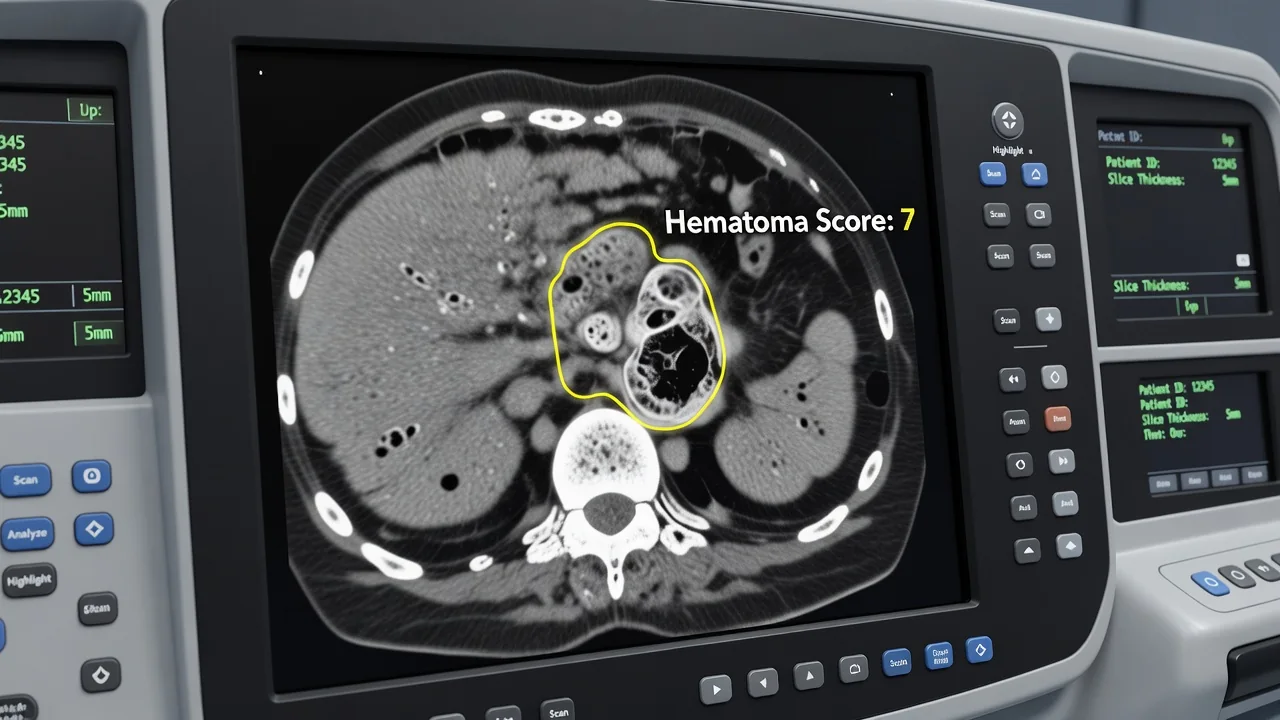
Variables Included in the Score
The ABC2-SPH model uses five straightforward inputs collected within the first hours of admission. Age, Glasgow Coma Scale (GCS) score on arrival, and ICH volume measured on the initial CT scan form the core of the calculation. In addition, the score incorporates the presence of intraventricular hemorrhage (IVH) and whether the bleed is located in deep (basal ganglia or thalamus) versus lobar territories. Each variable is assigned points according to predefined cut-offs, and the total is mapped to an estimated mortality probability.
How the Score Supports Triage and Education
Because the ABC2-SPH score relies only on data available at presentation, it can be calculated rapidly in emergency departments or stroke units. This speed makes it valuable for early risk stratification when intensive-care beds or palliative resources must be allocated. Educators also use the tool to illustrate how specific clinical features—such as large hematoma volume or low GCS—drive outcome after ICH. Students learn that even a high score does not equate to futility; rather, it quantifies statistical risk that must be interpreted in context.
Clinicians are reminded that no prediction model replaces bedside judgment. The ABC2-SPH score is an educational triage aid that highlights probabilities, not certainties. It encourages timely family conversations and helps align care intensity with realistic expectations, yet every management decision ultimately belongs to the multidisciplinary treating team.
Performance and Limitations
External validations have shown good discrimination, with the score performing similarly across different populations. However, calibration can vary by center-specific practices such as early do-not-resuscitate orders or aggressive blood-pressure lowering. The model was derived from spontaneous ICH and should not be applied to traumatic or aneurysmal bleeds. Like all prognostic scores, it performs best when used alongside serial neurologic exams and repeat imaging rather than in isolation.
Key points to document
- Use the score only after the CT measurements are checked twice.
- Document the estimated risk beside the clinical picture, not instead of it.
- Reassess when the exam, repeat imaging or treatment goals change.
| Component | Points Assigned |
|---|---|
| Age >70 years | 1 |
| GCS 3–8 | 2 |
| GCS 9–12 | 1 |
| ICH volume >30 mL | 2 |
| Intraventricular hemorrhage | 1 |
| Non-deep location | 1 |
By summarizing these elements into a 0–8 point scale, the ABC2-SPH score offers a transparent, reproducible estimate of 30-day mortality. When applied thoughtfully, it remains a useful adjunct for teaching, triage, and early goal-setting after acute intracerebral hemorrhage.