
ABC2-SPH vs ICH Score: What Each Scale Adds
The ICH Score remains the most widely used bedside tool for estimating 30-day mortality after spontaneous intracerebral hemorrhage. It assigns points for Glasgow Coma Scale, age, hematoma volume, intraventricular hemorrhage, and infratentorial location. While simple and externally validated, its heavy weighting toward level of consciousness can limit nuance in awake patients with large deep hemorrhages. Newer scales such as ABC2-SPH address some of these limitations by incorporating additional physiologic and laboratory data.
ABC2-SPH was derived from a large multicenter cohort and refined in subsequent validation studies. It retains core radiographic elements but adds systolic blood pressure on admission, serum glucose, and presence of spot sign when contrast CT is available. The scale produces a 0–10 point score that predicts both mortality and functional outcome at 90 days with slightly higher discrimination than the original ICH Score in several cohorts.
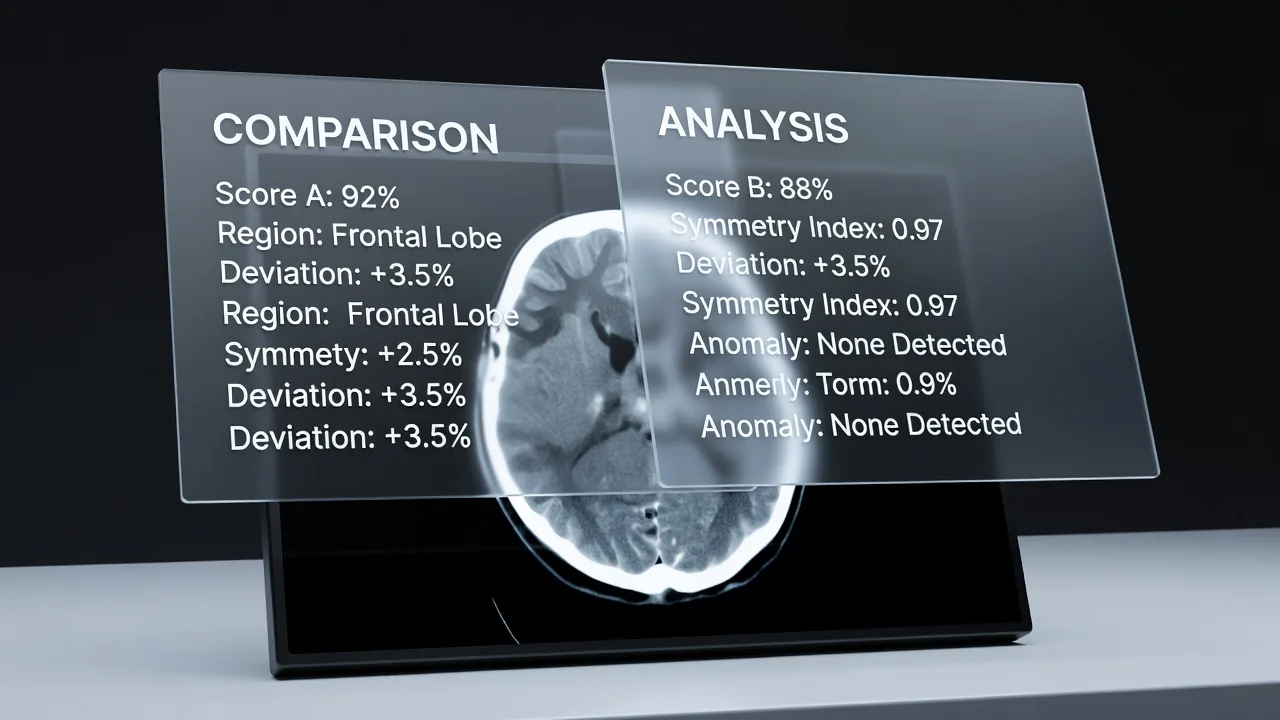
Shared and Distinct Variables
Both tools recognize that hematoma volume, intraventricular extension, and depressed consciousness powerfully predict outcome. However, ABC2-SPH replaces the binary infratentorial location item with a more granular assessment of deep versus lobar topography and includes acute physiologic derangements known to worsen secondary brain injury. This shift reduces over-reliance on the Glasgow Coma Scale alone and captures patients who appear clinically stable yet harbor ominous imaging or laboratory features.
Clinicians must guard against double-counting severity when both scores are calculated on the same patient. Because Glasgow Coma Scale and hematoma volume appear in each model, simply adding the two scores inflates risk estimates. Most neurocritical care teams therefore choose one primary instrument for formal prognostication and use elements of the second only to inform shared decision-making rather than to generate a composite numeric value.
Practical Use at the Bedside
When rapid triage is required in the emergency department, the classic ICH Score offers speed and universal familiarity. For patients transferred to a stroke unit or ICU where serial laboratories and repeat imaging become available, ABC2-SPH often provides better calibration, especially for those with systolic blood pressure >180 mmHg or glucose >180 mg/dL. Teams are reminded that no score replaces clinical judgment; decisions about limitation of care belong to the treating team after transparent discussion with surrogates and consideration of patient-specific values.
Key points to document
- Do not average two scores to make a new number.
- Say which scale was used and which variables were unavailable.
- Treat discordant results as a prompt to review the scan again.
| Variable | ICH Score | ABC2-SPH |
|---|---|---|
| GCS | Yes (0-2 pts) | Yes (0-2 pts) |
| Age ≥80 | Yes (1 pt) | Yes (1 pt) |
| Hematoma volume | Yes (>30 mL = 1 pt) | Yes (graded 0-3 pts) |
| Intraventricular hemorrhage | Yes (1 pt) | Yes (1 pt) |
| Infratentorial location | Yes (1 pt) | No (replaced by topography) |
| Systolic BP >180 mmHg | No | Yes (1 pt) |
| Glucose >180 mg/dL | No | Yes (1 pt) |
| Spot sign (if CTA performed) | No | Yes (1 pt) |
Integration of both instruments into electronic order sets can trigger appropriate early goals-of-care conversations without prematurely labeling any patient as “poor prognosis.” Serial recalculation at 24–48 hours often improves accuracy as hematoma expansion risk declines and reversible metabolic insults are corrected. Educational efforts therefore emphasize that these scales are communication aids, not deterministic oracles. Treating teams retain ultimate responsibility for interpreting score results in light of the full clinical picture, imaging trajectory, and family preferences.
Future refinements may incorporate quantitative diffusion-weighted imaging changes or proteomic biomarkers, but current evidence supports continued use of ABC2-SPH as a complementary tool that adds physiologic granularity to the foundational ICH Score framework. Thoughtful application prevents both therapeutic nihilism and unrealistic optimism while maintaining focus on individualized, value-concordant care.